The History of Concrete:
How old is concrete?
For me, it's hard to believe the history of concrete dates back a few thousand years before Christ.
I mean, I use concrete everyday pouring floors and stamping concrete. This stuff is pretty technical to make now. How did they figure that out back "then"?
When was concrete invented?
|
Evidence of a concrete like material was used by Egyptians about 3000 BC. They used gypsum mortars and mortars of lime & mud mixed with straw to bind bricks when building the pyramids. |
 |
|
More evidence can be found that Romans used a primal form of concrete about 2000 years ago to build the Coliseum and the Pantheon in Rome. |
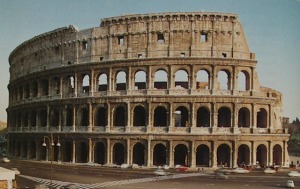 |
It consisted of small gravel and coarse sand mixed with hot lime and water, and sometimes even animal blood. To help prevent the concrete from shrinkage the Romans added horse hair to the mix.
The first "modern day" concrete is invented
|
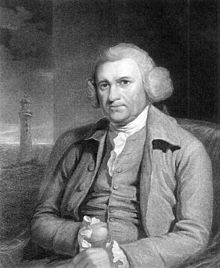
In 1756, John Smeaton, a british engineer, made the first modern day concrete (hydrolic cement). He pinpointed the compositional requirements needed to achieve "hydraulicity" in lime. This ultimately led to the invention of portland cement. In 1793 He built the Eddystone lighthouse in Cornwall, England with the use of hydrolic cement. |
 |
|
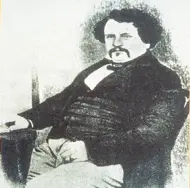
In 1824 an english inventor, Joseph Aspdin, invented Portland Cement. He made concrete by burning grounded chalk and finely crushed clay in a lime kiln until the carbon dioxide evaporated, producing a strong cement. |
 |
Portland cement has remained the dominant cement used in concrete production today.
The other major ingredient of concrete besides cement is the aggregate. Aggregates include sand, crushed stone, slag, fly ash, burned shale, and burned clay.
|
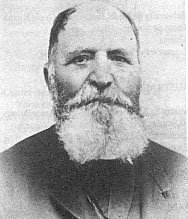
Reinforced concrete was invented in 1849 by Joseph Monier. He was a Parisian gardener who made garden pots and tubs of concrete reinforced with an iron mesh. He patented this concept in 1867. Reinforced concrete combines the tensile (bendable) strength of metal with the compressive strength of concrete to withstand heavy loads. |
 |
Important dates in the history of concrete
In 1886, the first rotary kiln was introduced in England that made constant production of cement.
In 1891, George Bartholomew, placed the first concrete street in the U.S.A. in Bellefontaine OH it still exists today.
In 1903, the first concrete high rise was built in Cincinnati, OH.
In 1930, air entraining agents were introduced to concrete to improve resistance to freeze/thaw damage.
In 1936, the first major concrete dams, Hoover Dam and Grand Coulee Dam were built.
In the 1970's, fiber reinforcement was introduced to concrete.
In the 1980's superplasticizers were introduced as admixtures and the "highest strength" concrete was used to build Union Plaza in Seattle WA.
In 1992 the tallest reinforced concrete building in the world was built in Chicago, Illinois (946 ft.).
In 1999, Polished concrete was first introduced in the U.S.A. by HTC, a swedish company. They polished a 40,000 square foot warehouse floor for the Bellagio hotel in Las Vegas.
As of 2011, the tallest reinforced concrete building is the Burj Khalifa in Dubai in the United Arab Emirates. This high rise building stands 2,717 feet tall, used 431,600 cubic yards of concrete and 61,000 tons of rebar.
The history of concrete is really amazing, it's hard to believe a material as old as concrete is such an important part of our "building infrastructure" today.
Concrete is as important a resource to us now as it was to the egyptians when they built the pyramids. Unbelievable!
More great information about concrete:
Concrete Vs Cement: What's the difference?
What is concrete made of? Learn all about the properties of concrete?
Do you know how much concrete weighs? Find out what the density of concrete really is.
Is all this stuff really necessary to make concrete? Concrete admixtures being used today.
How do they make lightweight concrete?
Crushed concrete aggregate - Learn how concrete is being recycled.
Redi mix concrete - When you want it delivered!
SCC CONCRETE - Self consolidating concrete flows almost like water.
Is fly ash concrete as good as "real" concrete?
What is shotcrete? Concrete you shoot through a hose.
Pervious concrete - Will water really run right through it?
Concrete is very heavy - How much does a cubic yard of concrete weigh?

Hi, I am Mike Day, owner of Day’s Concrete Floors, Inc. in Maine. I've been working with concrete for 40 years now, and this website is where I can share with you all the knowledge, wisdom and expertise I've gained from installing all kinds of stamped concrete, concrete floors, concrete overlays, concrete slabs and also repairing & fixing cracked or spalled concrete.
There’s a lot to cover, so if you have any questions, contact me!


LEARN HOW TO EPOXY A GARAGE FLOOR

FREE CONCRETE FINISHING TRAINING TUTORIAL VIDEO
Recent Articles
-
Don't get over charged! Here's my concrete slab cost for 2024
 I'm a concrete contractor that will tell you how much a concrete slab will cost. These are my actual prices I charge for 2024 when I quote my customers.
 -
The tools I use to do concrete work - Use the same tools I do.
 Learn about and purchase the tools I use to do concrete floors, stamping, staining, polishing, countertops, sawing and a whole lot more.
 -
How To Make Concrete Without A Mixer - Mixing Concrete by Hand
 Learn how to make concrete manually without a mixer. Explore simple steps and tips to achieve the right consistency and strength for your construction project.
 -
What are the Correct Concrete Mixing Ratios - Ratio Chart
 The proper concrete mixing ratios are 1:2:3, 1:3:3, 1:2:4 for cement, sand, and stone. Mixing ratios are based on what psi concrete you need. Mixing ratio chart
 -
Concrete Mix Ratios For 3000, 3500, 4000, and 4500 psi concrete
 Learn the precise mix ratios for concrete strengths of 3000, 3500, and 4000 psi to ensure durability and stability in concrete construction.