How Many 60lb Concrete Bags Make A Cubic Yard? The Complete Guide
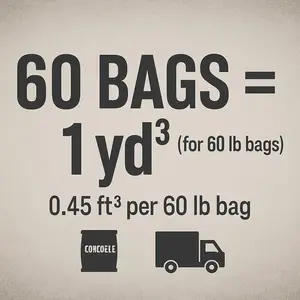
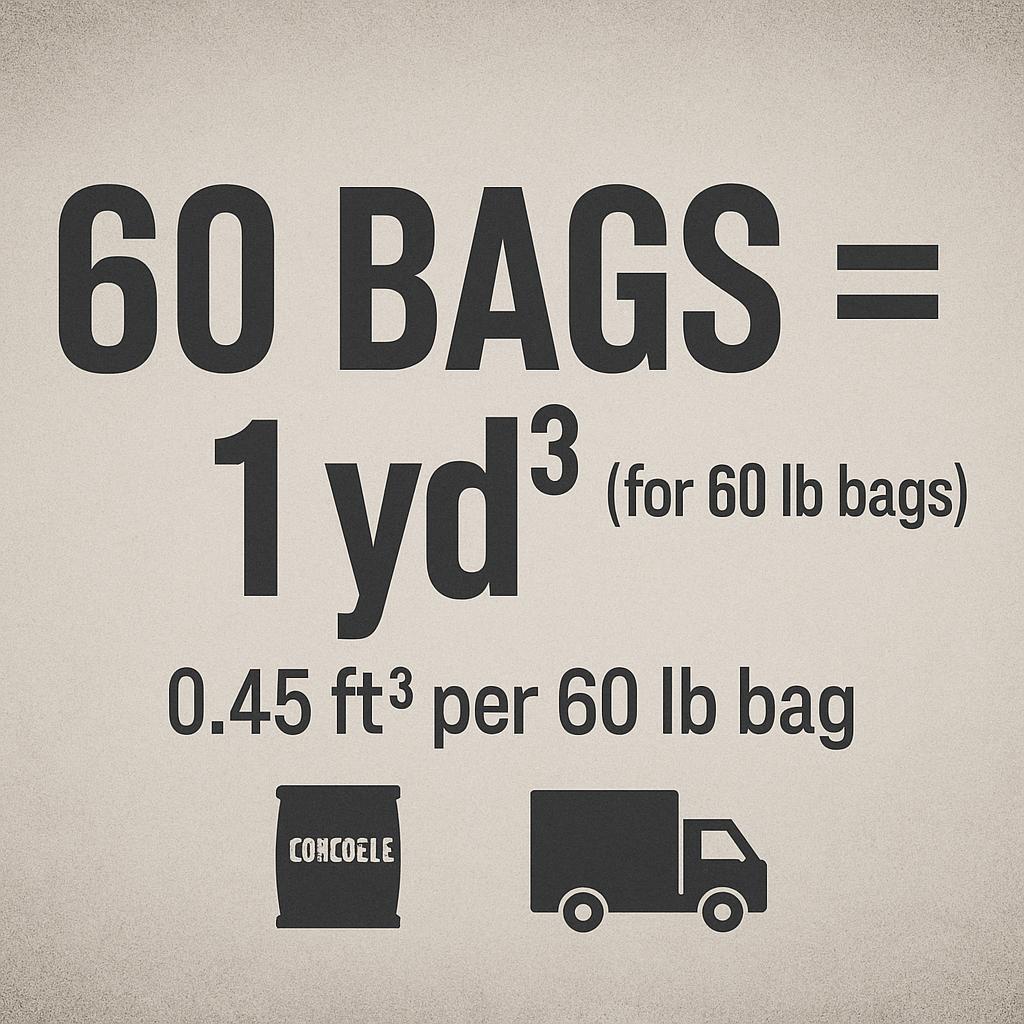 "60 bags = 1 yd³ (for 60 lb bags) — 0.45 ft³ per bag."
Introduction: Laying the Foundation for Your Concrete Project
Embarking on a concrete project, whether it's a new patio slab, a sturdy footing for a deck, or a simple walkway, begins with a critical question: how much material do you actually need?
Miscalculating the volume of concrete required can lead to costly overruns, wasted materials, or frantic last-minute trips to the hardware store.
One of the most common units of purchase is the pre-mixed 60lb bag, but project plans are often discussed in cubic yards.
This guide clearly and fully answers the main question. It gives you the knowledge to estimate your concrete needs accurately for any project.
Why Accurate Concrete Estimation is Crucial
A precise estimate is the bedrock of a successful project. Underestimate, and you risk creating a "cold joint"—a weak point where fresh concrete is poured against already hardened concrete—compromising the structural integrity of your slab.
Overestimate, and you're left with excess bags of cement mix, which are heavy, difficult to store, and represent a direct hit to your budget.
Getting the volume calculation right from the start saves time and money and ensures a professional, durable result. It transforms a potentially stressful task into a predictable and manageable part of your project plan.
The Core Question Answered: 60lb Bags Per Cubic Yard.
Let's address the central question directly before diving into the calculations that support it. This foundational knowledge will anchor your understanding as we explore the nuances of concrete volume.
The Quick Answer and Rule of Thumb
For a standard 60-lb bag of pre-mixed concrete, you will need approximately 60 bags to make one cubic yard.
This is a widely used rule of thumb in the construction and DIY communities, providing a fast and reliable starting point for your material estimate.
Concrete Calculator
Understanding the Yield: How Much Does One 60lb Bag Make?
 "60 bags = 1 yd³ (for 60 lb bags) — 0.45 ft³ per bag."
The "60 bags per yard" rule isn't arbitrary; it's based on yield.
A single 60lb bag of concrete mix, like those from popular brands such as Quikrete or Sakrete, typically yields about 0.45 cubic feet of wet, mixed concrete.
This yield is the volume of concrete produced once the dry mix is combined with the correct amount of water. It's the most crucial number in our calculation, as it links the bag's weight to the volume of space it will occupy.
Demystifying Volume: Cubic Feet, Cubic Yards, and Conversions
To confidently plan any concrete project, you must be comfortable with the industry-standard units of measurement.
Understanding the relationship between cubic feet and cubic yards is essential for accurate volume calculation.
What is a Cubic Yard of Concrete?
A cubic yard is a standard unit of volume used for large-scale material orders, including concrete, soil, and gravel.
Imagine a perfect cube that is one yard long, one yard wide, and one yard high. The space inside that cube is one cubic yard.
It's a significant amount of concrete, which is why it's the standard for ready-mix truck deliveries and a baseline for calculating needs for larger projects like driveways or foundations.
The Essential Conversion: Cubic Feet to Cubic Yards
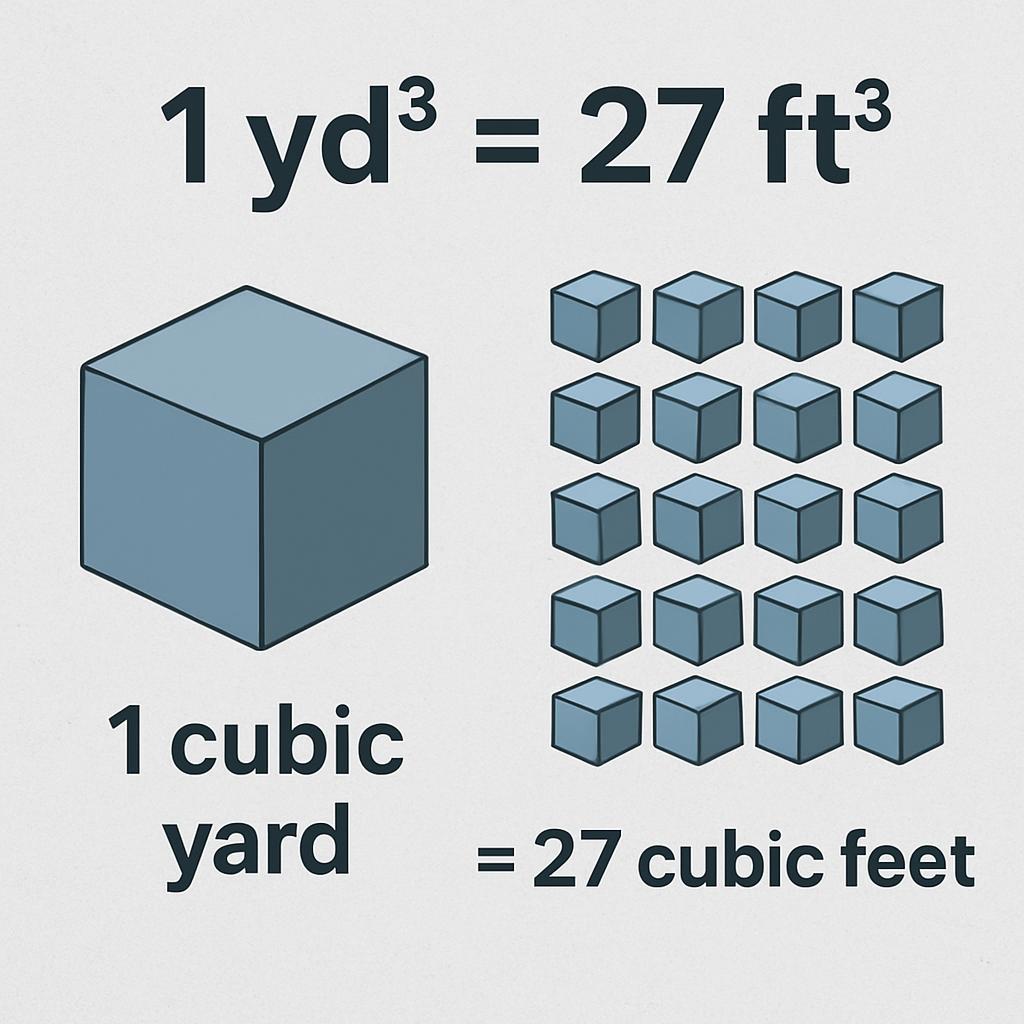 1 yd³ = 27 ft³ (one 3ft cube equals 27 one‑foot cubes).
The bridge between the yield of a single bag and the total volume of a project is the conversion factor between cubic feet and cubic yards. Since one yard is equal to three feet, a cubic yard is 3 feet x 3 feet x 3 feet.
Therefore, the critical conversion is: 1 Cubic Yard = 27 Cubic Feet.
This number, 27, is the key to converting your project's total volume from the smaller, more manageable unit of cubic feet (which you'll calculate from your measurements) into the industry-standard cubic yard.
Why These Units Matter for Your Project
You measure your project in feet and inches, but you often think in terms of total volume in cubic yards.
The bags of concrete you buy list their yield in cubic feet. Mastering these conversions allows you to move seamlessly between these scales.
You can measure your formwork in feet. Then, calculate the volume in cubic feet. Next, convert it to cubic yards to understand the project's size.
Finally, use the bag's yield in cubic feet to find out how many concrete bags to buy.
Step-by-Step Calculation: Determining Your Project's Exact Needs
Now, let's put these concepts into practice. Follow these four steps to move from basic measurements to a precise material list for your concrete project.
Step 1: Measure Your Project Dimensions
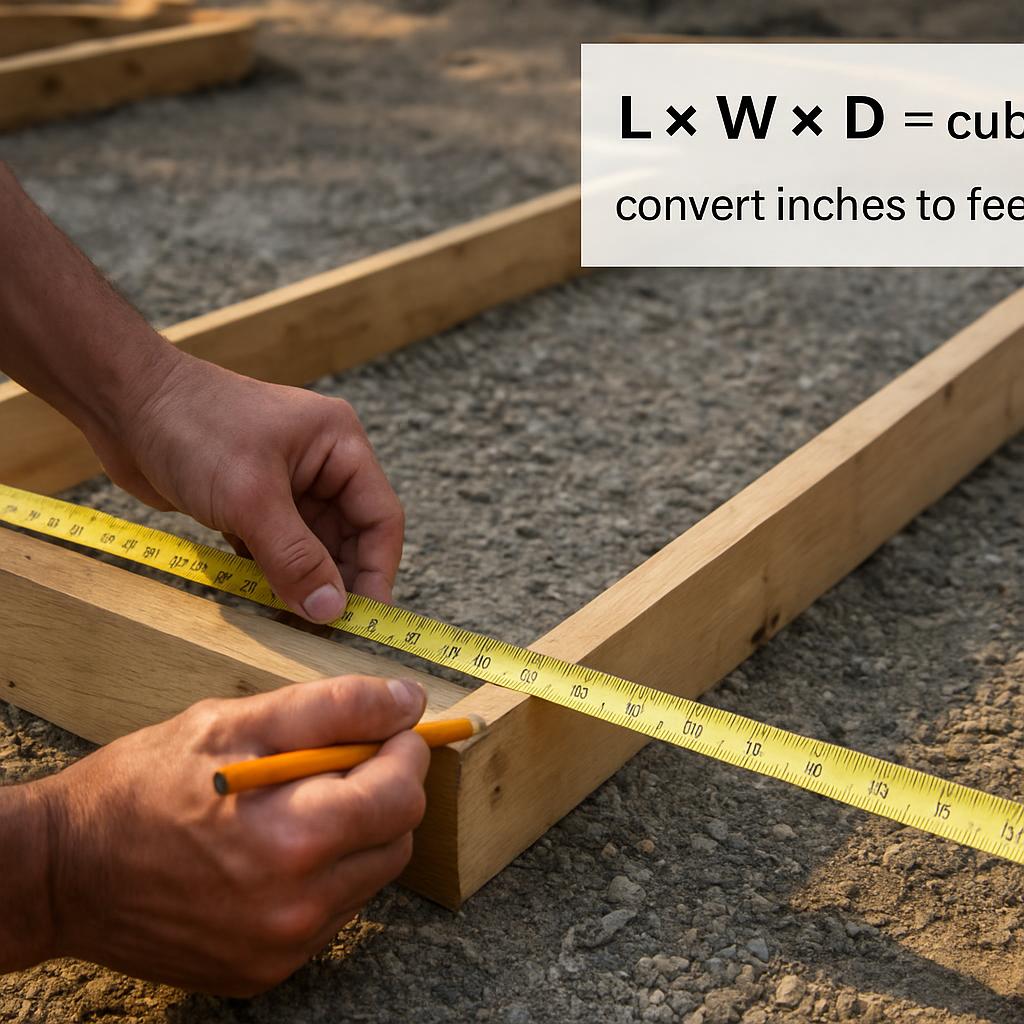 Measuring slab form with tape measure and L × W × D = cubic feet
Using a tape measure, determine the three essential dimensions of your project area in feet:
- Length (L)
- Width (W)
- Depth (or Thickness) (D)
Crucial Tip: All measurements must be in the same unit (feet). For depth, which is often measured in inches, convert it to feet by dividing by 12. For example, a 4-inch thick slab has a depth of 4 ÷ 12 = 0.333 feet.
Step 2: Calculate Total Volume in Cubic Feet
The next step is to perform a simple volume calculation. Multiply the three dimensions together to find the total volume of concrete needed in cubic feet.
Formula: Volume (in cubic feet) = Length (ft) x Width (ft) x Depth (ft)
Example: Let's say you're pouring a small concrete slab for a shed that is 10 feet long, 8 feet wide, and 4 inches (0.333 ft) thick. Volume = 10 ft x 8 ft x 0.333 ft = 26.64 cubic feet
Step 3: Convert Total Volume to Cubic Yards (Optional but Recommended)
While not strictly necessary for calculating bag counts, converting your total volume to cubic yards provides valuable context.
It helps you understand the scale of your project and decide whether ordering pre-mixed bags is more practical than a ready-mix truck delivery.
Formula: Volume (in cubic yards) = Total Cubic Feet ÷ 27
Example (continued): 26.64 cubic feet ÷ 27 = 0.987 cubic yards. This tells you your project requires just under one full yard of concrete.
Step 4: Calculate the Number of 60lb Bags Required
Finally, divide your total volume in cubic feet by the yield of a single 60lb bag (0.45 cubic feet) to determine the exact number of bags you need.
Formula: Number of 60lb Bags = Total Cubic Feet ÷ 0.45
Example (concluded): 26.64 cubic feet ÷ 0.45 = 59.2 bags
Since you can't buy a fraction of a bag, you must always round up to the following whole number. In this case, you would need 60 bags for the project.
Factors Influencing Concrete Bag Yields and Project Accuracy
The calculation provides a solid estimate, but real-world conditions can affect the actual volume of concrete needed. An innovative project manager accounts for these variables.
The "Add 10%" Rule: Why Over-Order Concrete?
It is a professional standard to add a 10% contingency to your final bag count. This buffer accounts for minor measurement errors, uneven subgrade that requires more concrete to fill, and inevitable small spills during mixing and placement.
Example: For our 60-bag project, a 10% buffer means adding six extra bags (60 x 0.10 = 6), for a final purchase total of 66 bags. Having a few extra bags on hand is far better than running out mid-pour.
Compaction and Settlement
When you pour and work wet concrete, you eliminate air pockets, causing it to settle and compact. This slight reduction in volume is another reason the 10% buffer is so crucial.
Properly compacting the concrete ensures maximum strength and durability, but it means the final volume of the placed yard of concrete might be slightly less than its wet, uncompacted volume.
Water Content and Mixing Consistency
The yield of 0.45 cubic feet per 60lb bag is based on adding the manufacturer-recommended amount of water.
Adding too much water can create a soupy mix that is weaker when it cures and may slightly increase the volume, while not adding enough can make the concrete difficult to work with and may slightly reduce the yield.
Always follow the instructions on the bag for consistent, predictable results.
Subgrade Preparation and Reinforcement
An improperly prepared or uneven subgrade (the ground beneath your slab) will require more concrete to fill the low spots, throwing off your estimate.
Ensure the area is level and well-compacted before you set your forms.
Materials like rebar or wire mesh take up some space in the concrete. This amount is usually minimal. The 10% extra material rule covers this slight difference.
Beyond 60lb Bags: A Comparison of Common Concrete Bag Sizes
While the 60lb bag is a popular choice, manufacturers offer other sizes of cement bags. Understanding their respective yields allows you to select the most efficient and economical option for your needs.
Standard Concrete Bag Yields
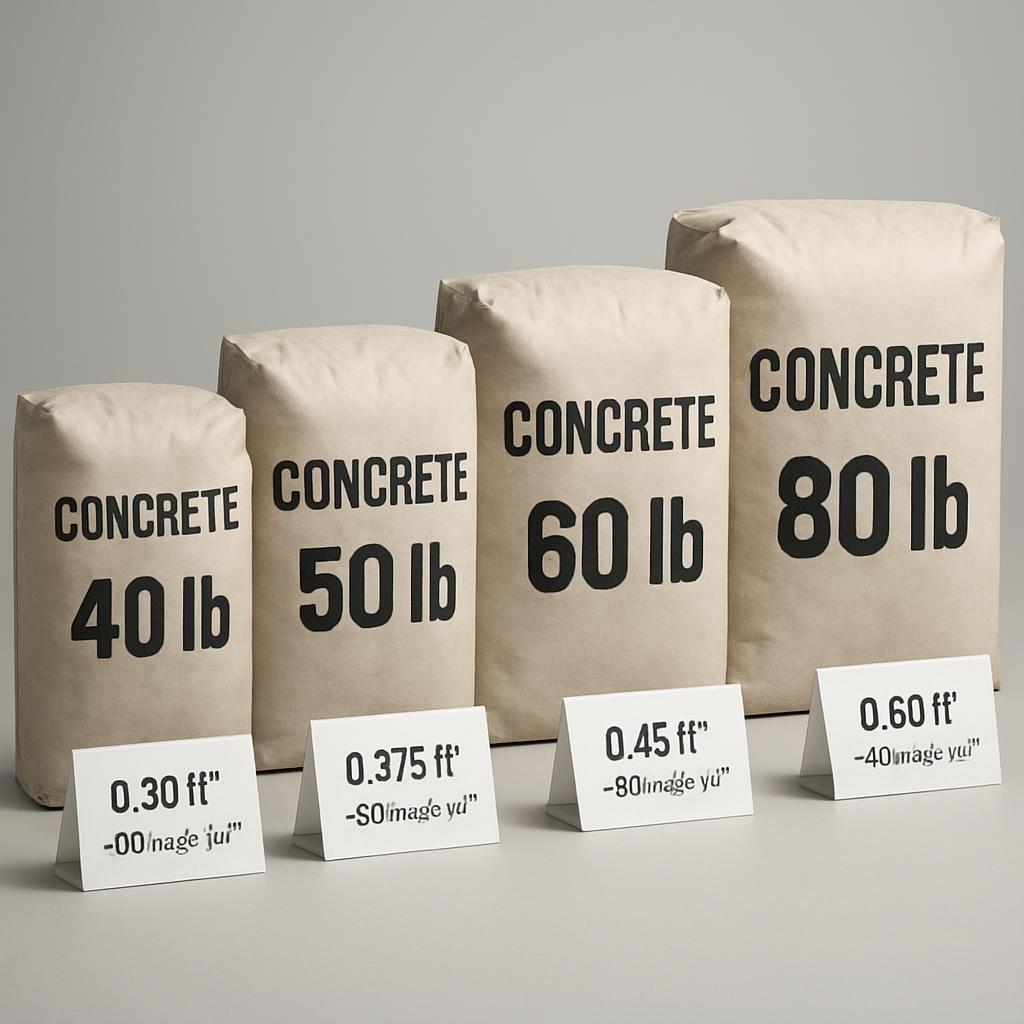
Here are the standard yields for the most common sizes of concrete bags:
| Bag size | Yield per bag (ft³) | Bags per cubic yard |
|---|---|---|
| 40 lb | 0.30 | ≈ 90 |
| 50 lb | 0.375 | ≈ 75 |
| 60 lb | 0.45 | ≈ 60 |
| 80 lb | 0.60 | ≈ 45 |
Choosing the Right Bag Size for Your Project
The best bag size depends on the scale of your project and your ability to handle the weight.
- 40lb bags are the easiest to lift and handle, ideal for minor repairs or projects where you're mixing one bag at a time.
- 60lb bags offer a good balance of volume and manageability, making them a versatile choice for many DIY projects.
- 80lb bags are the most economical per cubic foot, but can be physically demanding to lift and mix. They are best suited for larger projects where efficiency is a top priority.
Leveraging Technology: Concrete Calculators for Faster Estimates
For those who prefer to avoid manual math, online concrete calculators are an invaluable tool. They streamline the estimation process and can help verify your own calculations.
How Online Concrete Calculators Estimate Material Needs
A Concrete Calculator automates the steps outlined above. You input the length, width, and thickness of your project, and the tool instantly calculates the total volume in cubic feet and cubic yards.
Most calculators will also let you select your preferred bag size (40lb, 60lb, or 80lb) and show you the exact number of bags required, often including a 10% overage recommendation.
When to Trust (and Verify) Calculator Results
Online calculators are generally reliable as they use the same standard formulas.
However, it's always wise to perform a quick manual calculation to double-check the result.
This ensures you understand the numbers behind the estimate and haven't made a simple input error (e.g., entering depth in inches instead of feet).
Trust the calculator for speed, but verify with your own knowledge for confidence.
Cost Estimation: From Bags to Budget
An accurate volume estimate is the foundation of your project budget. With the number of bags determined, you can calculate your primary material costs.
Calculating Your Material Budget
To estimate your concrete cost, multiply the number of bags you need (including the 10% buffer) by the price per bag at your local retailer.
Building material prices are dynamic; always check current local pricing for an accurate budget.
Beyond Concrete Bags: Other Project Expenses
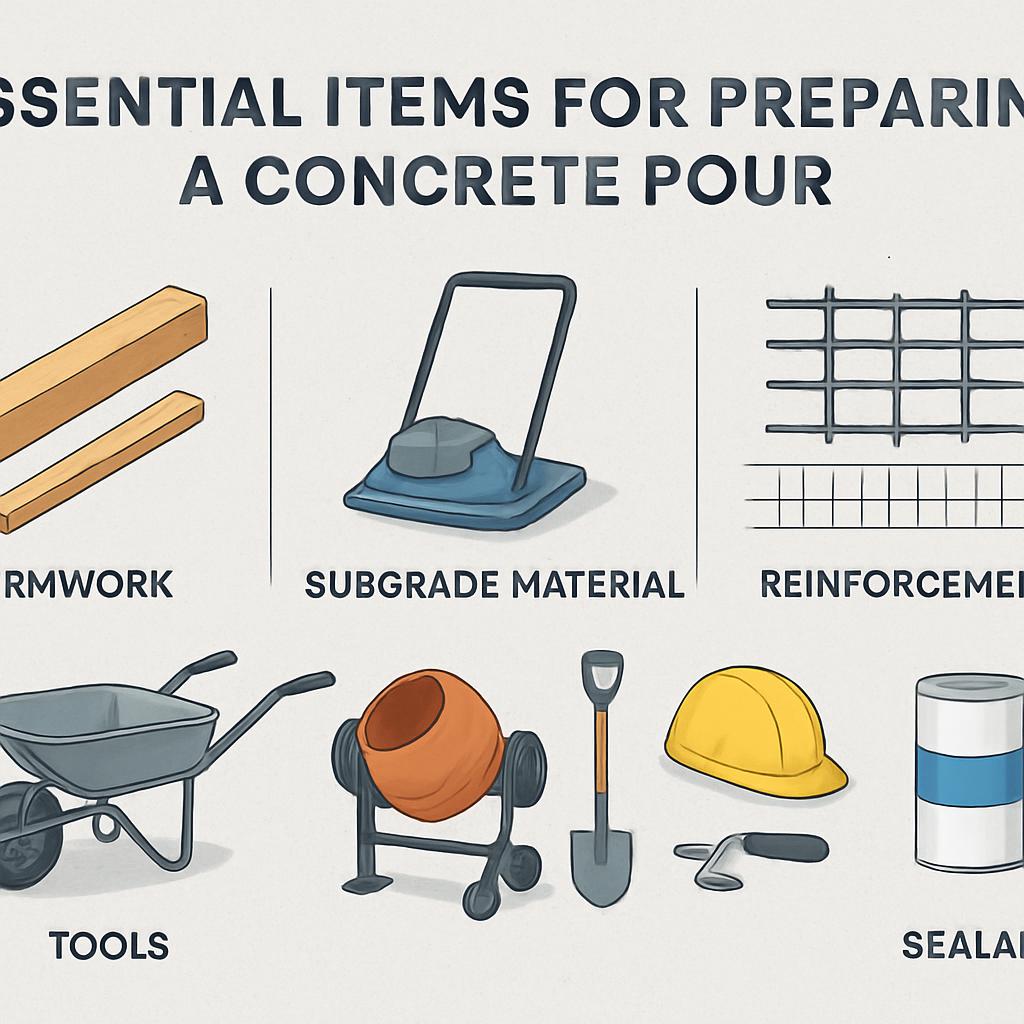
Remember that concrete itself is only one part of the total project cost.
Your full budget should also include:
- Formwork: Lumber (2x4s) and stakes.
- Subgrade Material: Gravel or crushed stone for a stable base.
- Reinforcement: Rebar or wire mesh for added strength.
- Tools: A wheelbarrow or mixer, shovels, trowels, and safety gear.
- Sealant: To protect the finished concrete from the elements.
Pro Tips for a Seamless Concrete Pour
- Stage Your Materials: Before you mix the first bag, have all your bags, a clean water source, and your mixer or wheelbarrow ready and close to the pour site.
- Check the Weather: Avoid pouring concrete on extremely hot, cold, or rainy days, as these conditions can negatively affect curing and final strength.
- Mix Systematically: Mix one or two bags at a time to ensure you can place and finish the concrete before it starts to set. Maintain a consistent water-to-mix ratio for every bag.
- Work with a Partner: Concrete work is physically demanding and time-sensitive. An extra set of hands makes mixing, pouring, and finishing far more manageable.
- Get my Concrete Slab Course: I teach you step by step how to install all different types of concrete slabs.
Conclusion
The answer is clear: you need approximately 60 bags of 60lb concrete mix to make one cubic yard.
More importantly, you now possess the knowledge to move beyond this rule of thumb and calculate the precise needs for your specific project.
Follow these steps: measure your dimensions, calculate the volume in cubic feet, and divide by the bag's yield of 0.45 cubic feet. This gives you an accurate material estimate.
Always remember to convert your depth measurement from inches to feet and to add a 10% contingency to your final count to account for waste and variations in your subgrade.
This thoughtful planning is the key to a smooth, cost-effective, and successful concrete project, ensuring the foundation you lay is as solid as the calculations behind it.

Hi, I am Mike Day, owner of Day’s Concrete Floors, Inc. in Maine. I've been working with concrete for 45 years now, and this website is where I can share with you all the knowledge, wisdom and expertise I've gained from installing all kinds of stamped concrete, concrete floors, concrete overlays, concrete slabs and also repairing & fixing cracked or spalled concrete.
There’s a lot to cover, so if you have any questions, contact me!
CHECK OUT OUR SPONSORS





LEARN HOW TO EPOXY A GARAGE FLOOR

FREE CONCRETE FINISHING TRAINING TUTORIAL VIDEO
Recent Articles
-
The Most Frequently Asked Questions About Concrete
 Find the answers to the most frequently asked questions about concrete on the internet
 -
How Many 60lb Concrete Bags Make A Cubic Yard? The Complete Guide
 Discover the number of 60lb concrete bags needed for a cubic yard. Get accurate calculations for your construction project.
 -
The True Cost of Polished Concrete: A Detailed Breakdown
Get the facts on polished concrete floor cost. Learn average prices per square foot and key factors impacting your budget in this guide -
How To Fix A Leak In A Basement Wall - Foundation Crack Repair
 How to fix a leak in a basement wall. I have a video tutorial that shows you the steps to take to fix a crack in your foundation wall.
 -
How much does a concrete patio cost for 2025 - New Updated Prices
 New and updated prices for what a concrete patio will cost you in 2025.