The True Cost of Polished Concrete:
A Detailed Breakdown of Factors & Pricing
Introduction: Beyond the Price Tag – Unveiling the True Cost of Polished Concrete
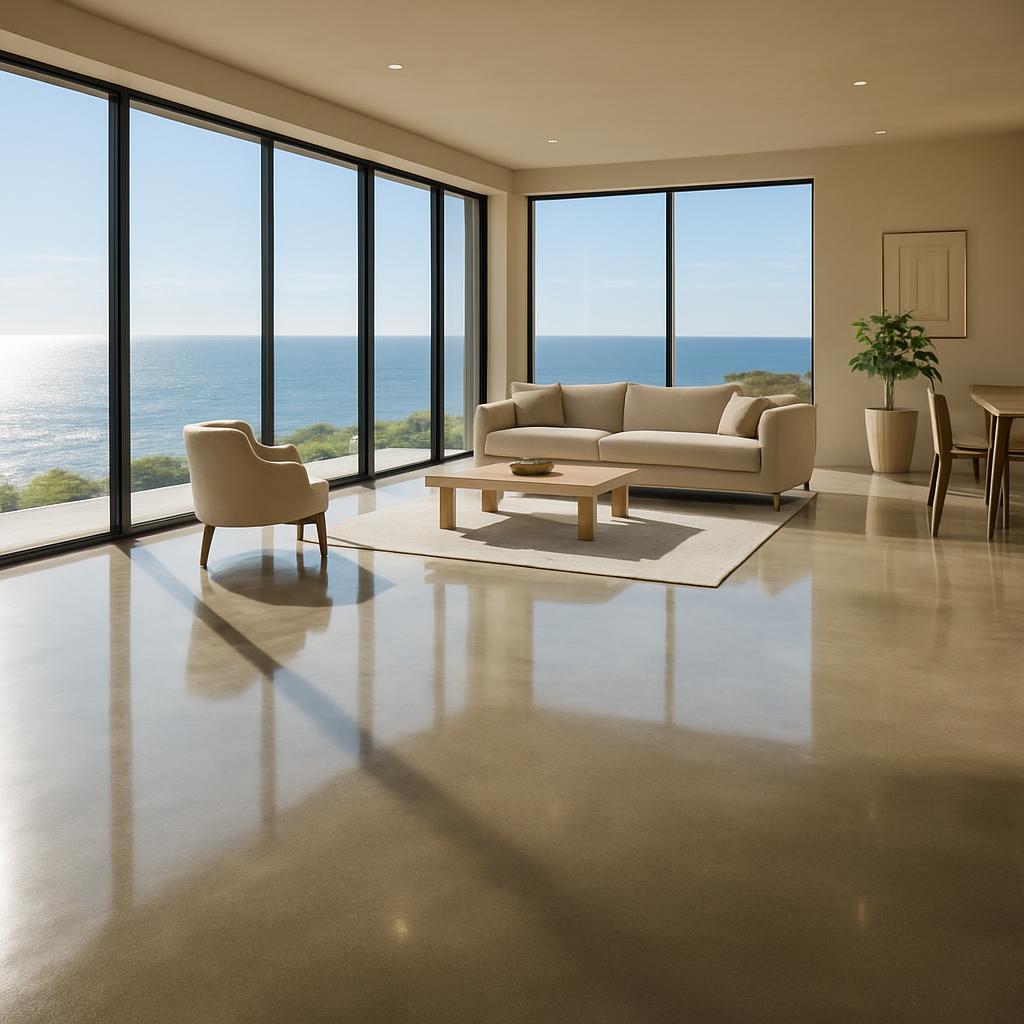
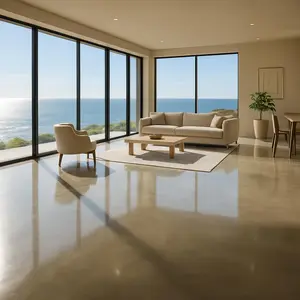
Polished concrete floors have become a hallmark of modern design, celebrated for their sleek aesthetic, durability, and low maintenance.
Yet when homeowners and business managers begin exploring this flooring option, they often encounter a wide, confusing range of price quotes.
The reality is that the final figure on an estimate is just one part of a larger equation. The "true cost" of polished concrete extends beyond the initial price tag, encompassing the condition of the existing slab, the desired finish, and the long-term value it delivers.
This article will demystify the pricing puzzle, providing a detailed breakdown of every factor that influences the cost of your polished concrete installation.
What is Polished Concrete and Why the Price Variability?
Before diving into costs, it's essential to understand what polished concrete is and why its price isn't a simple, one-size-fits-all number.
The significant price variability stems from the fact that no two projects are identical; each concrete slab presents a unique canvas with its own set of challenges and possibilities.
Defining Polished Concrete: More Than Just a Shiny Slab
Polished concrete is not a coating or a wax applied to a surface. It is a multi-step mechanical process that refines the concrete itself.
Using heavy-duty grinding machines with progressively finer diamond-impregnated tools, contractors grind, hone, and polish the concrete slab to achieve a desired level of smoothness and sheen.
During this process, a chemical densifier is applied to harden the concrete, increase its durability, and prepare it for the final polishing stages.
The result is a flooring system that is an integral part of the building structure—strong, resilient, and aesthetically versatile.
Initial Cost Expectations: General Ranges (Per Square Foot)
While specific costs vary, it's helpful to have a general baseline. Nationally, the cost for professionally installed polished concrete floors can range from $3 to $15 per square foot.
However, this is a broad spectrum. A basic grind and seal on a new, well-poured slab in a large commercial space might fall on the lower end, while a high-gloss, multi-colored finish in a small residential kitchen with a damaged slab could easily exceed the upper range.
According to HomeGuide, a typical residential basement project might cost between $2,000 and $8,000, illustrating how project size and location significantly influence the total investment.
Core Factors Driving the "True Cost" of Polished Concrete: A Detailed Breakdown
Several key variables directly influence the final cost of a polished concrete project.
Understanding these factors will empower you to better interpret quotes and make informed decisions for your residential or commercial space.
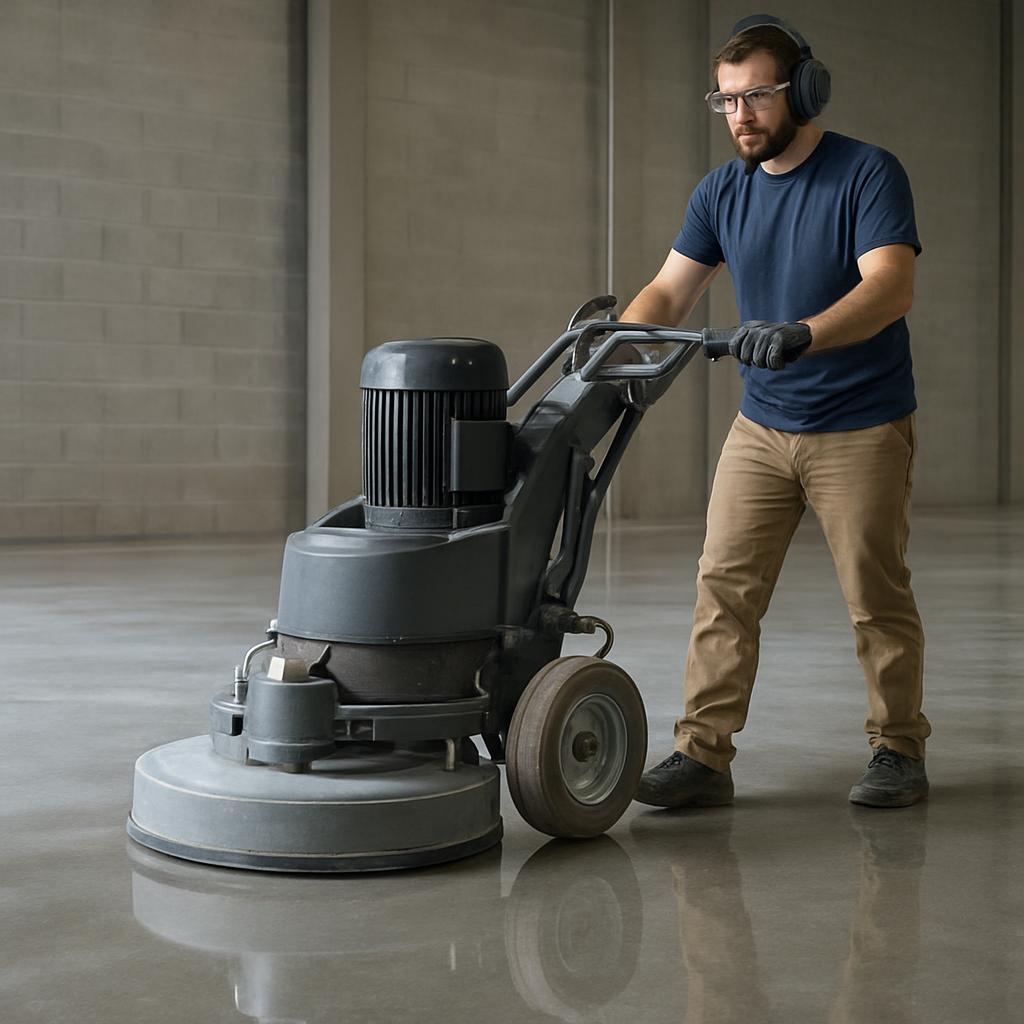
1. Existing Concrete Condition: The Foundation of Your Project's Cost
The state of your current concrete slab is the single most significant cost driver. A new, smooth, and level slab requires minimal preparation. Conversely, an older slab with imperfections demands extensive labor and materials.
Key issues include:
- Cracks: Hairline cracks may be minor, but larger structural cracks require specialized fillers like epoxy or polyurea, adding to both material and labor costs.
- Stains: Oil, grease, or paint stains may need to be ground out or treated with chemical removers, which can be time-consuming.
- Previous Coverings: The removal of old tile, carpet, or epoxy coatings adds a significant labor cost for demolition and surface preparation.
- Hardness & Porosity: The density of the concrete affects the type of diamond tooling required and the amount of densifier the slab will absorb.
2. Desired Finish & Sheen Level: Aesthetics vs. Effort
The final look you want to achieve directly correlates with the amount of work required. The polishing process involves multiple passes with the grinding machines.
The higher the desired sheen, the more passes are needed with finer-grit diamonds.
- Matte Finish (Low Sheen): Requires the fewest grinding steps (e.g., up to 200 grit), making it the most cost-effective option.
- Satin/Semi-Gloss Finish (Medium Sheen): A popular choice for both residential and commercial spaces, this finish (e.g., 400-800 grit) requires additional polishing steps.
- High-Gloss Finish (High Sheen): This mirror-like finish (e.g., 1500 grit or higher) demands the most extensive grinding and polishing, significantly increasing labor time and cost.
3. Size and Layout of the Area: Economy of Scale vs. Complexity
The overall square footage and the layout of the space play a crucial role in determining the per-square-foot cost.
- Economy of Scale: Large, open areas like a warehouse or expansive retail floor allow contractors to use large, efficient equipment and work continuously. This often results in a lower cost per square foot.
- Complexity & Obstacles: Small, partitioned rooms, tight corners, and numerous obstacles (like columns or built-in furniture) require smaller, less efficient equipment and extensive, detailed edge work done by hand. This complexity increases the labor hours and drives up the per-square-foot cost, making a small residential bathroom more expensive per foot than a large commercial space.
4. Geographic Location & Regional Labor Rates: Where You Live Matters
Labor is a substantial component of any polished concrete installation. The cost of skilled labor varies significantly from one region to another.
Urban areas with a higher cost of living will naturally have higher labor rates than rural areas. This is a simple matter of supply and demand, and it's a factor that can impact the total project cost by 10-20% or more.
The North American market, for instance, is a dominant force in the industry and is expected to account for the highest revenue by the end of 2027, reflecting its widespread adoption and established labor markets.
5. Decorative Elements & Customization: Beyond Basic Polish
Moving beyond a simple polished finish opens up a world of customization, but each addition comes at a cost.
- Color Dyes & Stains: Integral color or topical stains can be used to create unique looks, from subtle earth tones to vibrant hues.
- Scoring & Patterns: Cutting lines into the concrete to mimic tile or create geometric patterns adds a significant labor component.
- Exposed Aggregate: Grinding deeper into the slab to expose the small stones (aggregate) within the concrete creates a terrazzo-like appearance but requires more aggressive initial grinding steps and materials.
The Polishing Process & "What You're Paying For": An Investment in Craftsmanship and Expertise
When you receive a quote for polished concrete, you are paying for a meticulous, multi-stage process that combines heavy machinery with skilled craftsmanship.
1. Surface Preparation (Surface Prep): The Critical First Stage
This involves thoroughly cleaning the slab, removing any existing coatings, and performing all necessary repairs to cracks and spalls. This stage is non-negotiable for a quality finish and ensures the subsequent steps are effective.
2. Grinding & Honing: Shaping the Surface
This is where the heavy work begins. Using coarse-grit metal-bond diamonds, the contractor grinds the surface to remove imperfections and create a flat, uniform plane.
Subsequent passes with progressively finer grits (honing) begin to smooth the surface in preparation for polishing.
3. Densification & Hardening: Strengthening the Slab
After the initial grinding passes, a liquid chemical densifier is applied.
This solution penetrates the concrete and creates a chemical reaction that hardens and densifies the surface, making it less porous and more resistant to abrasion.
This is a crucial step for achieving a high-quality, long-lasting polish.
4. Polishing: Achieving the Desired Sheen and Smoothness
Using fine-grit resin-bond diamonds, the floor is polished through several passes. Each pass refines the surface further, creating increasing levels of light reflectivity and sheen until the desired finish is achieved.
5. Sealing & Protection: The Final Touch for Longevity
Finally, a penetrating sealer is often applied to provide additional protection against stains and moisture.
This sealer sinks into the pores of the concrete rather than forming a film on top, preserving the natural look and feel of the polished surface.
DIY Polished Concrete vs. Professional Installation: Weighing the True Trade-offs
The allure of saving on labor costs can make a DIY approach seem tempting, but it’s crucial to understand the hidden risks and expenses.
The Allure of DIY: Perceived Savings
The primary motivation for DIY is avoiding the high cost of professional labor. Enthusiasts may see the project as a challenging but rewarding way to achieve a high-end look on a budget.
The Hidden Costs and Risks of DIY Concrete Floor Polishing
Polishing concrete is not a simple weekend project. It requires renting expensive, specialized equipment, including a planetary grinder and an industrial dust extractor.
The cost of diamond tooling, densifiers, and sealers can also add up quickly. More importantly, there is a steep learning curve.
Mistakes like creating uneven swirl marks, grinding too aggressively, or misapplying chemicals can permanently damage the slab, leading to costs far exceeding the initial savings of hiring a professional.
Long-Term Value & ROI: Beyond the Initial Investment in Polished Concrete
The true cost of any flooring must be evaluated over its entire lifespan. This is where polished concrete truly shines.
Durability & Longevity
When properly installed and maintained, polished concrete floors are incredibly durable and resistant to abrasion, chipping, and heavy traffic.
Their lifespan can easily exceed two decades, with some sources stating that polished concrete floors can last for 20 years or more with proper care, far outlasting materials like carpet or vinyl.
Low Maintenance Routine & Cost Savings
Unlike other flooring options, polished concrete does not require waxing, stripping, or specialized coatings.
Routine maintenance consists of simple dust mopping and occasional cleaning with a neutral pH cleaner. This drastically reduces long-term maintenance labor and material costs, especially in large commercial spaces.
Health, Safety & Environmental Benefits
Polished concrete provides a seamless, non-porous surface that doesn't harbor dust mites, allergens, or mold.
Furthermore, the process has minimal to no VOC (Volatile Organic Compound) emissions, as it primarily refines the existing slab rather than introducing new synthetic materials.
The growing demand for such sustainable flooring solutions is a key driver behind the market's projected 5.9% CAGR from 2024 to 2035.
Polished Concrete vs. Other Flooring Options: A Cost Comparison
Polished Concrete vs. Hardwood Flooring
Hardwood offers a classic, warm aesthetic but typically has a higher initial installation cost ($10-$25+ per sq. ft.). It is also susceptible to scratches, water damage and requires periodic refinishing.
Polished Concrete vs. Tile Flooring (Ceramic, Porcelain, Terrazzo Tile Floors)
Tile installation costs can be comparable or higher than polished concrete, especially for high-end materials like terrazzo.
Grout lines are a primary drawback, as they collect dirt and require regular, intensive cleaning and eventual re-grouting.
Polished Concrete vs. Epoxy Flooring
Epoxy is a topical coating applied over concrete. While it offers excellent chemical resistance, it is prone to scratching and can yellow with UV exposure. It could eventually peel or delaminate and require complete replacement.
Polished Concrete vs. VCT (Vinyl Composition Tile)
VCT is one of the cheapest flooring options upfront. However, its lifecycle cost is extremely high.
It requires constant waxing and buffing and has a short lifespan in high-traffic commercial spaces, needing replacement much sooner than polished concrete.
Avoiding the "Cost of Not Polishing Properly": Hidden Dangers of Cutting Corners
Choosing a contractor based solely on the lowest bid can be a costly mistake.
Inexperienced or unscrupulous contractors may cut corners by skipping grinding steps, using inferior densifiers and sealers, or failing to perform adequate surface preparation.
The result is a floor with a blotchy finish, low durability, and a sheen that fades quickly.
Correcting a poorly executed job often requires completely re-grinding the surface from scratch, effectively doubling the project's cost.
Conclusion
The true cost of polished concrete is an investment in durability, aesthetics, and long-term value, not just a line item on an invoice.
By understanding the critical factors—from the initial condition of your concrete slab to the desired level of sheen—you can navigate the quoting process with confidence.
While the upfront cost may be higher than some budget flooring options, its exceptional longevity, minimal maintenance requirements, and environmental benefits deliver a superior return on investment for years to come.
To ensure you get the best value, seek detailed quotes from reputable professionals who can assess your specific needs and create a beautiful, lasting floor that becomes an asset to your property.
Return from Polished Concrete Cost to Concrete Cost
Return from Polished Concrete Cost to Everything About Concrete Home Page
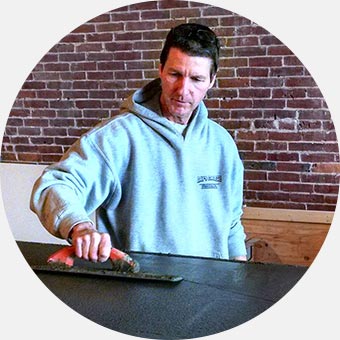
Hi, I am Mike Day, owner of Day’s Concrete Floors, Inc. in Maine. I've been working with concrete for 45 years now, and this website is where I can share with you all the knowledge, wisdom and expertise I've gained from installing all kinds of stamped concrete, concrete floors, concrete overlays, concrete slabs and also repairing & fixing cracked or spalled concrete.
There’s a lot to cover, so if you have any questions, contact me!
CHECK OUT OUR SPONSORS


LEARN HOW TO EPOXY A GARAGE FLOOR
FREE CONCRETE FINISHING TRAINING TUTORIAL VIDEO
Recent Articles
-
The Most Frequently Asked Questions About Concrete
 Find the answers to the most frequently asked questions about concrete on the internet
 -
How Many 60lb Concrete Bags Make A Cubic Yard? The Complete Guide
 Discover the number of 60lb concrete bags needed for a cubic yard. Get accurate calculations for your construction project.
 -
The True Cost of Polished Concrete: A Detailed Breakdown
Get the facts on polished concrete floor cost. Learn average prices per square foot and key factors impacting your budget in this guide -
How To Fix A Leak In A Basement Wall - Foundation Crack Repair
 How to fix a leak in a basement wall. I have a video tutorial that shows you the steps to take to fix a crack in your foundation wall.
 -
How much does a concrete patio cost for 2025 - New Updated Prices
 New and updated prices for what a concrete patio will cost you in 2025.